LESSON 14 · WORK & BUSINESS
Business Networking Events
Forty friendly, practical ways to meet people at business events, so you leave with real connections, not just cards.
Networking is just making friends in a business setting. Be curious, be kind, and follow up. That is the whole secret.
40 tipsAudio on every tip7-day plan
40 tips that really help
These ideas come from well-known books and studies on networking, trust and conversation, and everyday practice. The first ten work almost anywhere. Pick one and try it today.
TIP 1
Walk in with a plan: three goals for any event
A networking event can feel like a noisy ocean. Decide three goals before you arrive, such as meeting three people, learning one useful thing and making one follow-up. Small goals take the pressure off.
TRY THIS
Before your next event, write three small goals on your phone. Check them off as you go.
TIP 2
The 15-second introduction people remember
When someone asks what you do, a long answer loses them. A good introduction takes fifteen seconds and has three parts: who you are, who you help and one interesting detail. It invites a question.
TRY THIS
Write your fifteen-second introduction with three parts, and say it aloud three times today.
TIP 3
Start a conversation at the buffet or the bar
The food and drink area is the friendliest place at any event. People wait, look around and need something to do with their hands. A simple comment about the food is the easiest opener in the world.
TRY THIS
At your next event, start one chat at the buffet or bar with a simple comment about the food.
TIP 4
The best networking question: what is keeping you busy?
What do you do? is the question everyone is tired of answering. Try, what’s keeping you busy these days? It invites a real answer about projects and passions, and tells you what matters to them.
TRY THIS
Use the question what’s keeping you busy these days? with three new people at your next event.
TIP 5
Find the person standing alone
At every event a few people stand alone. They may be shy or new, and they are often the easiest and most grateful people to talk to. Walk up with a smile and say, mind if I join you?
TRY THIS
At your next event, speak first to someone who is standing alone.
TIP 6
Business cards: give, get and use
Business cards are still useful if you use them well. Give one when asked, ask for theirs with interest and write a note on the back about what you talked about. A card with a note is a reminder of a person.
TRY THIS
After each conversation, write one line on the back of the card or in your phone about what you discussed.
TIP 7
How to leave a conversation gracefully
Knowing how to leave a chat is as important as how to start. A kind, clear exit leaves the other person feeling valued. Say it has been great talking, then offer to stay in touch or introduce them to someone.
TRY THIS
Practise one graceful exit line, and use it once at your next event.
TIP 8
Remember names at a crowded event
At events you meet many people quickly, and names slip away. Repeat the name once, link it to something and use it again before you part. If you forget, ask again and say you want to get it right.
TRY THIS
At your next event, repeat each new name aloud once and use it again when you say goodbye.
TIP 9
Nervous? The five-minute arrival trick
Many people feel nervous at the door of a busy room. Give yourself five minutes. Say hello to the host, get a drink and make one small comment to the first person you see. The nerves usually drop fast.
TRY THIS
At your next event, set a five-minute timer in your mind and make one small comment in that time.
TIP 10
Make one real connection, not twenty cards
It is tempting to collect as many cards as you can, but a pile of cards is not a network. One real connection, where you listen and share, is worth more than twenty quick hellos.
TRY THIS
At your next event, aim for two long conversations rather than ten short ones.
TIP 11
Listen for how you can help
The best networkers quietly ask: how could I help this person? When you listen for a need, a goal or a problem, you find a way to give something useful, like an introduction, an article or encouragement.
TRY THIS
In your next conversation, listen for one need and offer one small help.
TIP 12
Talk about your work without bragging
When people ask about your work, you want to sound proud but not boastful. Be specific and share the benefit to others. Use stories and facts instead of big claims.
TRY THIS
Write one short story about a client or colleague you helped, with one number, and be ready to tell it.
TIP 13
What to say when asked: what do you do?
The question what do you do can feel awkward if you are between jobs or changing careers. Answer honestly and warmly, and focus on what you enjoy or what you are working toward.
TRY THIS
Write two versions of your answer: one for work, one for what you are building next.
TIP 14
When someone only talks about themselves
Sooner or later you meet someone who talks and talks and never asks about you. Listen for a while, find a pause and exit kindly. You can learn from them and still protect your time.
TRY THIS
If someone talks too long, use an exit line within two minutes: It was great to hear about that. I’d like to meet a few others.
TIP 15
When someone only wants to sell you something
Some people at events treat you only as a customer and start pitching at once. Stay calm. Say, that sounds interesting, I’m not looking for that now, but I’d like to hear what you enjoy about your work.
TRY THIS
Prepare a polite no thanks line, and use it kindly if a pitch comes.
TIP 16
Meeting speakers after a talk
After a talk, speakers are often surrounded by people. Wait your turn, be brief and be specific. Thank them for one idea that helped you and ask one short question.
TRY THIS
After the next talk you attend, thank the speaker for one specific idea and ask one question.
TIP 17
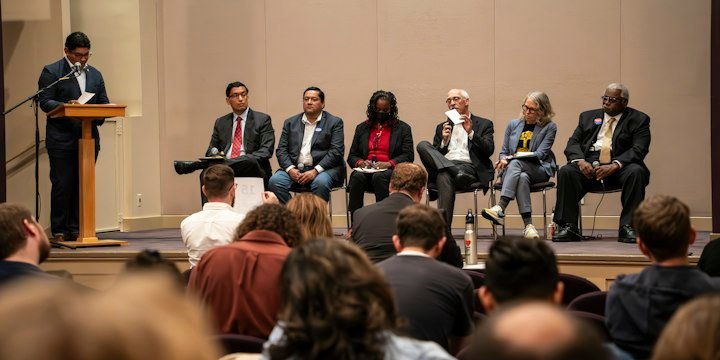
Panel and Q&A events: ask a good question
At events with a Q&A, a good question makes people notice you. It is short, clear and useful to others. Introduce yourself briefly, then ask one question starting with what or how.
TRY THIS
Prepare one short question before the next panel. Ask it, or keep it for a talk afterwards.
TIP 18
Online networking events: break the ice in the chat
Online events can feel cold, but the chat box and breakout rooms are warm places. Introduce yourself in the chat and reply to comments. In breakout rooms, speak first with your name, role and what you hope to learn.
TRY THIS
At your next online event, post one friendly comment in the chat and speak first in a breakout room.
TIP 19
Mention a common contact politely
If you know someone in common, mention it. Ana told me about your work. It creates an instant bridge and a feeling of trust. Use only positive, true statements.
TRY THIS
Think of one person you know who might know others at your next event. Use their name as a warm opener.
TIP 20
Follow up within 24 hours: the message template
The real work of networking starts after the event. Send a short message within a day, while people still remember you. Mention where you met, a detail from the talk and a small next step.
TRY THIS
Within 24 hours of your next event, send one message with three parts: where we met, one detail and one next step.
TIP 21
Make introductions between people you meet
One of the best things you can do at an event is to introduce two people who should know each other. It costs nothing and makes you the link. Say what each does, why they might enjoy meeting, then step back.
TRY THIS
At your next event, introduce two people and say why they should meet.
TIP 22
Networking as an introvert: pace yourself
Networking can drain introverts, because large groups use a lot of energy. Pace yourself: arrive early, talk to a few people and leave when your energy is low. Your listening skills are a strength.
TRY THIS
Plan to stay for ninety minutes at your next event and talk with three people, then leave happily.
TIP 23
Networking when you are new to the country or industry
Being new can feel like a disadvantage, but people love to help someone who is learning. Be honest about being new and ask for advice. Your fresh eyes can also bring useful ideas.
TRY THIS
Ask one experienced person: I’m new here. What do you wish you had known when you started?
TIP 24
Dress, posture and smile: the quiet signals
People form an impression before you speak. Clothing that suits the event, an open posture and a smile all say, I’m friendly. Keep your right hand free to shake, and keep your arms open.
TRY THIS
At your next event, check your posture every ten minutes and keep a gentle smile.
TIP 25
Manage food, drink and conversation together
Holding a plate, a glass and a conversation is hard. Eat before or after, keep your hands free when meeting people, and drink moderately. A clear head helps you listen and remember names.
TRY THIS
At your next event, eat something before you arrive, and keep one hand free.
TIP 26
Meeting a senior person: be brief and bright
Senior people are busy and in demand. When you meet one, be short, warm and clear. Say your name, one sentence about why you are there and ask one good question. Do not pitch.
TRY THIS
Prepare one respectful question for a senior person, and keep your conversation under two minutes.
TIP 27
Talk about more than work
Business events are not only about business. People enjoy talking about hobbies, travel, food and their city. These topics create warmth, and warmth creates trust. Follow any personal hint you hear.
TRY THIS
In your next event conversation, ask one non-work question, like what do you enjoy doing outside work?
TIP 28
Ask for advice, not favours
When you meet someone you admire, do not ask for a job or a favour. Ask for advice. People feel flattered and are more willing to share their experience. Advice talks often lead to introductions naturally.
TRY THIS
Ask one person you admire: What advice would you give someone starting where I am?
TIP 29
Handling a cold response
Sometimes you approach someone and they answer with one word or turn away. It stings, but it is rarely about you. Smile, say something kind and move on. The next person is probably friendly.
TRY THIS
If you meet a cold response, say, nice to meet you, and move on with a smile.
TIP 30
Conferences: coffee breaks are gold
At a conference, the coffee breaks are where connections happen. People are relaxed, in lines and looking for someone to talk to. Ask about sessions, share what you learned and exchange contact details.
TRY THIS
At the next conference, use every coffee break to start one conversation by asking about a session.
TIP 31
Speak plainly: skip the jargon
Every industry has its own words, but at events you meet people from many fields. Jargon confuses them and builds a wall. Explain your work as you would to a smart friend from another field.
TRY THIS
Explain your job in one sentence using no jargon, and test it on a friend.
TIP 32
Ask for an introduction politely
Sometimes the person you want to meet is not in the room. Ask a mutual contact for an introduction. Make it easy: say who you want to meet, why, and offer a short message they can forward.
TRY THIS
Ask one contact for an introduction to someone, with a two-line message they can forward.
TIP 33
Keep a simple contact notebook
You will meet many people, and memory is not enough. Keep a simple notebook with the name, where you met, one detail and a next step. Review it once a month to stay in touch.
TRY THIS
Create a simple list with four columns: name, where we met, one detail, next step. Add three people today.
TIP 34
Connect on LinkedIn the right way
After meeting someone, you may connect online. Add a short personal note, such as: it was great to meet you at the expo, I enjoyed our talk about packaging. A note makes your request stand out.
TRY THIS
Next time you send a connection request, add one personal sentence about where you met.
TIP 35
The two-line follow-up that leads to coffee
You do not need a long message to ask for a coffee. Two lines are enough: one to remind them of your chat, and one to ask for a short meeting. Offer two choices of time and make it easy.
TRY THIS
Write a two-line message to someone you met, asking for a fifteen-minute coffee or call.
TIP 36
Be known for one thing
People remember those who are known for something clear, like helping people write better or fixing bikes. You can have many skills, but lead with one. It makes it easy for others to refer you.
TRY THIS
Decide the one thing you want to be known for, and say it in one sentence at your next event.
TIP 37
Give first: share an article or a tip
After a chat, the best follow-up is often a gift: an article, a tip or a useful link. It shows you listened and gives them something of value. Keep it short and relevant, with no strings attached.
TRY THIS
After your next chat, send one useful link or tip related to what the person said.
TIP 38
Stay in touch: the quarterly check-in
Networks fade without care. Every three months, send a short message to a few contacts: how are you, I saw your news, congratulations. It takes minutes and keeps the relationship alive.
TRY THIS
Put a reminder in your calendar every three months and message three contacts each time.
TIP 39
Job hunting: ask for stories, not jobs
If you are looking for work, do not ask people for a job at once. Ask for their story: how they got their job, what they enjoy and what advice they have. These chats build knowledge and open doors.
TRY THIS
Ask one person in your target field for a fifteen-minute chat about their story.
TIP 40
Your 30-day networking plan
Networking is a habit, not an event. In 30 days: week one, prepare your introduction and goals; week two, attend an event or reach out to two people; week three, follow up; week four, give something useful.
TRY THIS
Write the four weeks on a card. Start this week with your fifteen-second introduction.
Easy things to say
When you are stuck, pick one of these. They work almost anywhere.
FRESH QUESTION
“What is keeping you busy these days?”
INTRODUCTION
“I am Sam. I help small shops understand their money.”
JOIN A PERSON
“Hi, mind if I join you? Is this your first time here?”
GRACEFUL EXIT
“It has been great talking. I would like to say hello to a few more people.”
ASK FOR ADVICE
“What would you advise someone starting where I am?”
FOLLOW UP
“It was great to meet you. Could we have a short coffee next week?”
Your first week
One small action a day. Each day is only a little bigger than the last.
DAY 1
Write your fifteen-second introduction
DAY 2
Ask one person what is keeping them busy
DAY 3
Start a chat at the buffet or coffee line
DAY 4
Speak first to someone standing alone
DAY 5
Write a note after every conversation
DAY 6
Send one follow-up within 24 hours
DAY 7
Share one useful link or tip
Further reading
- Never Eat Alone by Keith Ferrazzi. A classic on building relationships by helping others first.
- Give and Take by Adam Grant. How generous people build strong networks.
- How to Talk to Anyone by Leil Lowndes. Many small tricks for starting and ending conversations.
Photos are from Unsplash and used under the Unsplash licence. The tips above are written in our own words and are general guidance. The books are suggestions for further reading.
Keep your place and keep growing
Create a free account to save your progress and pick up the next lesson where you stopped. No card needed.
Start freeThese lessons share general learning and everyday ideas. They are not medical or mental health advice. If you feel very anxious, low or unwell, please talk to a doctor or a qualified professional.