






















LESSON 06 · SPEAKING CLEARLY

Find Your Natural Volume

Forty ways to find your natural volume, so you are heard without shouting.

Too quiet loses people. Too loud tires them.

40 tipsAudio on every tip7-day plan

40 tips that really help

These ideas come from How to Be Heard (Julian Treasure), The Right to Speak (Patsy Rodenburg), and Quiet (Susan Cain), and everyday practice. Pick one tip and try it today.

Photo for the tip: Too quiet loses people
TIP 1

Too quiet loses people

If listeners strain to hear you, they stop trying. A voice that is easy to hear is a kindness, and it makes you sound more sure. A voice that is easy to hear is a gift.

TRY THIS
Ask a friend to sit across a room and listen to you read a few lines. Ask, ‘Can you hear me comfortably?’
Listen to the full explanation 2 min · American English
Photo for the tip: Too loud pushes people away
TIP 2

Too loud pushes people away

A voice that is much louder than the room feels aggressive or tiring. The aim is ‘easy to hear’, not ‘everyone must hear’. Be easy to hear, not hard to bear.

TRY THIS
Next time you talk with a small group, notice how people sit and look. If they lean back, bring your volume down a little.
Listen to the full explanation 2 min · American English
Photo for the tip: Find your baseline
TIP 3

Find your baseline

Your natural volume is the level you use when chatting with a friend across a table. It is your home base. Know your baseline, and adjust from there.

TRY THIS
Chat with a friend at a table, and notice how your voice feels. Say a sentence a little softer, then a little louder, and compare.
Listen to the full explanation 2 min · American English
Photo for the tip: Add ten percent in a group
TIP 4

Add ten percent in a group

In groups and rooms with noise, add a little extra volume and project forward. Small boosts make a big difference. A small boost helps you be heard in a group.

TRY THIS
Next time you join a group, remember your baseline. Add a little breath and open your mouth a bit more.
Listen to the full explanation 2 min · American English
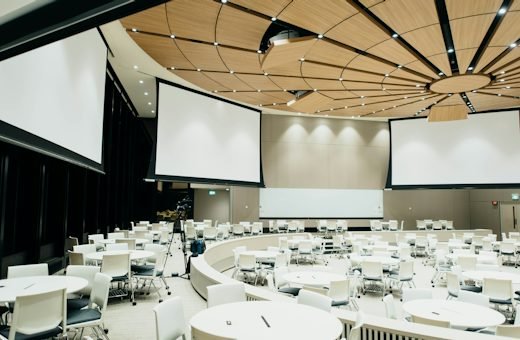
Photo for the tip: Aim at the back of the room
TIP 5

Aim at the back of the room

Imagine your voice travelling to the furthest person. This mental aim often adjusts volume and support naturally. Send your voice to the back, and the whole room hears.

TRY THIS
In your next group, choose a person at the far end. Look at them and imagine your words landing in their hands.
Listen to the full explanation 2 min · American English
Photo for the tip: Support with breath
TIP 6

Support with breath

Volume comes from steady breath, not throat tension. Take a low breath and let it carry your words. Louder through breath, never through the throat.

TRY THIS
Breathe in low, and say a sentence at your baseline. Say it again with a little more air, but with the same loose throat.
Listen to the full explanation 2 min · American English
Photo for the tip: Open your mouth
TIP 7

Open your mouth

A slightly more open mouth gives more sound without strain. Many quiet speakers speak through almost closed teeth. Open the door, and your voice walks out.

TRY THIS
Stand in front of a mirror and say a sentence as you normally do. Say it again, dropping your jaw about a finger’s width.
Listen to the full explanation 2 min · American English
Photo for the tip: Speak into the room
TIP 8

Speak into the room

Face the people and lift your head. Speaking down at the floor sends your voice into the ground. Lift your head, and your voice flies out.

TRY THIS
Hold your notes at chest height, not on the table. Glance down, take the next phrase, then lift your head and say it to the room.
Listen to the full explanation 2 min · American English
Photo for the tip: Use a microphone wisely
TIP 9

Use a microphone wisely

With a mic, keep it near your mouth and speak at normal volume. Shouting into a mic distorts. Let the mic carry your voice, and speak naturally.

TRY THIS
Hold the mic about a hand’s width below your chin, pointing at your mouth. Speak at normal volume and keep the distance steady.
Listen to the full explanation 2 min · American English
Photo for the tip: Test the mic
TIP 10

Test the mic

Always test volume in the actual room. Ask someone to listen from the back. Test the sound where you will speak.

TRY THIS
Arrive early and ask for a sound check. Speak a few sentences while a helper listens from the back.
Listen to the full explanation 2 min · American English
Photo for the tip: Know the Lombard effect
TIP 11

Know the Lombard effect

When noise rises, people naturally speak louder, and then louder still. Notice it in restaurants, and use steady breath, not strain, to be heard. In noise, go closer and clearer, not louder.

TRY THIS
Next time you are in a noisy place, notice if your voice rises without you choosing. Take a low breath, slow down, and shape your words clearly.
Listen to the full explanation 2 min · American English
Photo for the tip: Move closer in noise
TIP 12

Move closer in noise

Standing closer to the person is better than shouting. Turn your face toward them so they can see your mouth. Step closer, face them, and speak clearly.

TRY THIS
In your next noisy place, step closer to the person you are speaking to. Face them, so they can see your mouth.
Listen to the full explanation 2 min · American English
Photo for the tip: Speak lower in quiet rooms
TIP 13

Speak lower in quiet rooms

In a library or at a bedside, soften your volume and keep your clarity. Quiet does not mean mumble. Be quiet, but never muffled.

TRY THIS
Practise a soft voice at home, with a loose jaw and low breath. Keep your consonants crisp, and move your lips fully.
Listen to the full explanation 2 min · American English
Photo for the tip: Match the mood
TIP 14

Match the mood

A wedding toast, a classroom and a hospital room need different volumes. Read the setting. Match your voice to the room and the mood.

TRY THIS
Before your next event, ask yourself what the mood is. Choose a volume that fits, and plan to adjust.
Listen to the full explanation 2 min · American English
Photo for the tip: Do not let your voice fall away
TIP 15

Do not let your voice fall away

Many voices lose power at the end of sentences. Keep your volume steady to the last word. Finish every sentence at the volume you began.

TRY THIS
Take a low breath before a sentence. Say it, keeping the same volume to the last word.
Listen to the full explanation 2 min · American English
Photo for the tip: Practise with a friend at distance
TIP 16

Practise with a friend at distance

Stand at the far end of a room and say a sentence, then ask if they heard it. Calibrating by feedback works fast. Test your voice at distance with a friend.

TRY THIS
Ask a friend to stand about ten metres away. Say a sentence, and ask if they heard. Adjust until they say yes.
Listen to the full explanation 2 min · American English
Photo for the tip: Record in a room
TIP 17

Record in a room

Recordings at different distances reveal how you sound. Listen for clarity and ease. A recording at distance shows your real reach.

TRY THIS
Place your phone two metres away and read a paragraph. Move it to the far side of the room and read again.
Listen to the full explanation 2 min · American English
Photo for the tip: Use your torso, not your throat
TIP 18

Use your torso, not your throat

Imagine your whole chest and belly as the speaker cabinet. Throat tension cuts power. Let your whole body ring, not just your throat.

TRY THIS
Put a hand on your chest and count aloud, feeling the buzz. Relax your throat and imagine your chest as a big, open box.
Listen to the full explanation 2 min · American English
Photo for the tip: Relax your shoulders
TIP 19

Relax your shoulders

Tight shoulders squeeze the voice. Let them drop and the sound opens. Drop the shoulders, and the voice opens.

TRY THIS
Lift your shoulders to your ears and hold for two seconds. Drop them and breathe out slowly.
Listen to the full explanation 2 min · American English
Photo for the tip: Smile slightly
TIP 20

Smile slightly

A gentle smile brightens tone and carries better. Dull tones need more volume to be heard. A slight smile makes a voice that carries.

TRY THIS
Say ‘good morning’ three times with a flat face. Say it three times with a slight smile.
Listen to the full explanation 2 min · American English
Photo for the tip: Use the "consonants carry" rule
TIP 21

Use the "consonants carry" rule

Clear consonants help you be heard without extra loudness. Say the ends of words crisply. Crisp consonants carry further than loud vowels.

TRY THIS
Say ‘cat, cap, can’ slowly with crisp end sounds. Say a sentence full of end consonants, such as ‘Take the next bus to the park’.
Listen to the full explanation 2 min · American English
Photo for the tip: Speak slower, not louder
TIP 22

Speak slower, not louder

Often the key to being heard is a slower pace and clearer shape, not more volume. Try slowing down before turning up. Slow down before you turn up.

TRY THIS
Next time someone says ‘pardon?’, do not raise your voice. Repeat the sentence at three quarters of your speed, with an open mouth.
Listen to the full explanation 2 min · American English
Photo for the tip: Check your seating
TIP 23

Check your seating

In meetings, sit forward and face the group. Slumped back voices get lost. Sit forward and your voice goes forward.

TRY THIS
Next time you sit in a meeting, move to the front half of your chair. Plant both feet and lengthen your spine.
Listen to the full explanation 2 min · American English
Photo for the tip: Stand to be heard
TIP 24

Stand to be heard

Standing opens the lungs and projects the voice. In group calls, standing helps energy. Standing gives your voice room.

TRY THIS
Before your next call, stand up with your feet hip width apart. Breathe low and smile as you speak.
Listen to the full explanation 2 min · American English
Photo for the tip: Use eye contact to adjust
TIP 25

Use eye contact to adjust

Watch faces. If people lean forward or squint, you are too quiet. If they lean back, you may be too loud. Watch the faces, and adjust your voice.

TRY THIS
In your next talk, look at the faces every minute. If you see squinting or leaning in, add breath and open your mouth.
Listen to the full explanation 2 min · American English
Photo for the tip: Ask kindly
TIP 26

Ask kindly

‘Can everyone hear me at the back?’ is a good, confident question. People appreciate it. Ask if they can hear you, and then give them what they need.

TRY THIS
Write ‘Can everyone hear me?’ at the top of your notes. Ask it warmly at the start, and wait for answers.
Listen to the full explanation 2 min · American English
Photo for the tip: Never apologise for volume
TIP 27

Never apologise for volume

If someone asks you to speak up, simply do so with a smile. No apology needed. Say ‘of course’, breathe, and speak up.

TRY THIS
Practise one calm phrase: ‘Of course.’ Say it with a smile, and take a low breath before repeating your sentence.
Listen to the full explanation 2 min · American English
Photo for the tip: Be gentle with a hoarse voice
TIP 28

Be gentle with a hoarse voice

If your voice is tired, use a microphone if possible, rest and hydrate. Do not push. A tired voice needs kindness, not force.

TRY THIS
If your voice is hoarse, ask if you can use a microphone. Speak softly, drink water and avoid whispering.
Listen to the full explanation 2 min · American English
Photo for the tip: Use hand gestures to emphasise
TIP 29

Use hand gestures to emphasise

Gestures can add energy without raising volume. They signal key points. A clear gesture adds weight without volume.

TRY THIS
Choose two key points in your next talk. Plan one clear gesture for each.
Listen to the full explanation 2 min · American English
Photo for the tip: Use pauses for impact
TIP 30

Use pauses for impact

A pause before a key point draws attention more than shouting. Use it. A pause can say what a shout cannot.

TRY THIS
Pick the one key line in your talk. Before it, stop, breathe low, and count two.
Listen to the full explanation 2 min · American English
Photo for the tip: Lower your pitch for authority
TIP 31

Lower your pitch for authority

A calm, lower pitch at normal volume feels authoritative and is easier on the voice. Speak from a lower note. A lower, relaxed pitch carries calm authority.

TRY THIS
Hum a comfortable low note for ten seconds. Say a sentence starting from that note, with a loose jaw.
Listen to the full explanation 2 min · American English
Photo for the tip: Modulate on purpose
TIP 32

Modulate on purpose

Vary volume: soft for intimacy, stronger for emphasis. Variety holds attention. Soft and strong, used on purpose, keep people listening.

TRY THIS
Mark two places for soft and two for strong in your notes. Practise them aloud, staying close to your baseline.
Listen to the full explanation 2 min · American English
Photo for the tip: Avoid constant loudness
TIP 33

Avoid constant loudness

Even a strong voice tires listeners if it never changes. Mix it up. Mix loud with quiet, and your voice stays alive.

TRY THIS
Record a one-minute talk at a steady loud volume. Record it again, using soft, medium and strong sections.
Listen to the full explanation 2 min · American English
Photo for the tip: Do not shout to a phone
TIP 34

Do not shout to a phone

Phones pick up quiet voices well. Speak clearly and calmly, close to the microphone. Speak calmly to the phone, and it will carry you.

TRY THIS
On your next call, speak at your baseline, close to the mic. If the line is poor, slow down and say key words twice.
Listen to the full explanation 2 min · American English
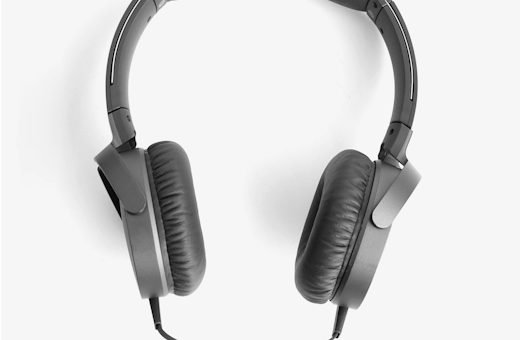
Photo for the tip: Check your headset
TIP 35

Check your headset

Test headset volume and position before video calls. A good mic setup removes strain. A good headset check saves your voice.

TRY THIS
Ten minutes before a call, put on your headset and check the mic position. Speak at your baseline and watch the level meter.
Listen to the full explanation 2 min · American English
Photo for the tip: Watch the background noise
TIP 36

Watch the background noise

Reduce noise sources so you do not need to raise your voice. Close the window or move rooms. Remove the noise, and you will not need to shout.

TRY THIS
Before your next call, stand still and listen to the room for ten seconds. Remove or reduce any noise you can.
Listen to the full explanation 2 min · American English
Photo for the tip: Learn from broadcasters
TIP 37

Learn from broadcasters

Radio voices are natural, clear and steady. Listen and notice how they sound. Natural, steady and clear is the broadcaster’s way.

TRY THIS
Choose a host or podcaster whose voice you like. Listen for five minutes and note their volume, pace and pauses.
Listen to the full explanation 2 min · American English
Photo for the tip: Celebrate being heard
TIP 38

Celebrate being heard

When people respond to what you said without asking you to repeat, it is a win. Enjoy it. Notice the times you are heard, and enjoy them.

TRY THIS
Keep a small note on your phone titled ‘Heard’. Each day, write one moment when you were heard first time.
Listen to the full explanation 2 min · American English
Photo for the tip: Ask for feedback on volume
TIP 39

Ask for feedback on volume

After a talk or meeting, ask one trusted person, ‘Was my volume right?’ Specific feedback calibrates you far faster than guessing. A clear question gets clear feedback.

TRY THIS
Choose one person you trust who will be in your next talk. Ask them to watch your volume, and give you one comment afterwards.
Listen to the full explanation 2 min · American English
Photo for the tip: Warm up your volume before you start
TIP 40

Warm up your volume before you start

Say your first sentence once at full volume in a private spot, so your voice has already been ‘out’ before the real moment. It prevents the hesitant first line. Say your first line at full volume before you walk in.

TRY THIS
Write your first sentence on a card. Ten minutes before you speak, say it aloud twice at the volume you will use.
Listen to the full explanation 2 min · American English

Easy things to say

When you are stuck, pick one of these. They work in many everyday situations.

CHECK

“Can everyone hear me?”

ASK

“Should I speak up?”

ADJUST

“Let me project a little more.”

SHARE

“I am working on volume.”

THANK

“Thanks for telling me.”

CLOSE

“Thank you for hearing me.”

Your first week

One small action a day. Each day is only a little bigger than the last.

DAY 1
Test your volume in a room
DAY 2
Ask a friend to stand at the back
DAY 3
Record yourself
DAY 4
Speak to the far wall
DAY 5
Practise a medium voice
DAY 6
Adjust for noise
DAY 7
Review feedback

Further reading

  • The Quick and Easy Way to Effective Speaking (Dale Carnegie)
  • Talk Like TED (Carmine Gallo)
  • Made to Stick (Chip and Dan Heath)

The tips above are written in our own words and are general guidance. The books are suggestions for further reading.

More lessons in “Speaking Clearly”

Keep going. Small steps every day make a big change.

← Previous: Warm Up Your Voice in One MinuteNext: Vary Your Tone to Keep Attention →

  1. Slow Down by Ten Percent
  2. Speak From Your Belly, Not Your Throat
  3. The Magic of the Pause
  4. End Sentences Like You Mean Them
  5. Warm Up Your Voice in One Minute
  6. Find Your Natural Volume
  7. Vary Your Tone to Keep Attention
  8. Use Words a Ten-Year-Old Would Understand
  9. Short Sentences Sound Confident
  10. Cut Jargon and Filler Words
  11. Lead With Your Main Point
  12. Say One Idea at a Time
  13. Replace Vague Words With Exact Ones
  14. Read Your Words Out Loud First
  15. Open Your Mouth and Speak Clearly
  16. Stop Mumbling in Three Steps
  17. Pronounce Hard Words With Confidence
  18. Breathe at the Right Moments
  19. Speak Clearly on the Phone
  20. Speak Clearly on Video Calls
  21. Handle an Accent With Pride
  22. The Point, Reason, Example Formula
  23. The Rule of Three
  24. Start With Why It Matters
  25. Tell a Short Story Instead
  26. Use Numbers and Pictures Wisely
  27. Finish With One Clear Takeaway
  28. Answer a Question in Thirty Seconds
  29. Replace Um With a Silent Pause
  30. What to Do When You Lose Your Thought
  31. Recover From a Mistake Smoothly
  32. Stop Over-Explaining
  33. Stop Apologising Before You Speak
  34. Practise With a Voice Recorder
  35. Stay Clear When You Are Nervous
  36. Speak Clearly When Put on the Spot
  37. Explain Something Complicated Simply
  38. Speak Clearly in an Argument
  39. Speak Clearly to Someone Senior
  40. Your Daily Clarity Habit
Scroll to Top